PH records best Asian Games medal haul in 60 years
Oct 5, 2026
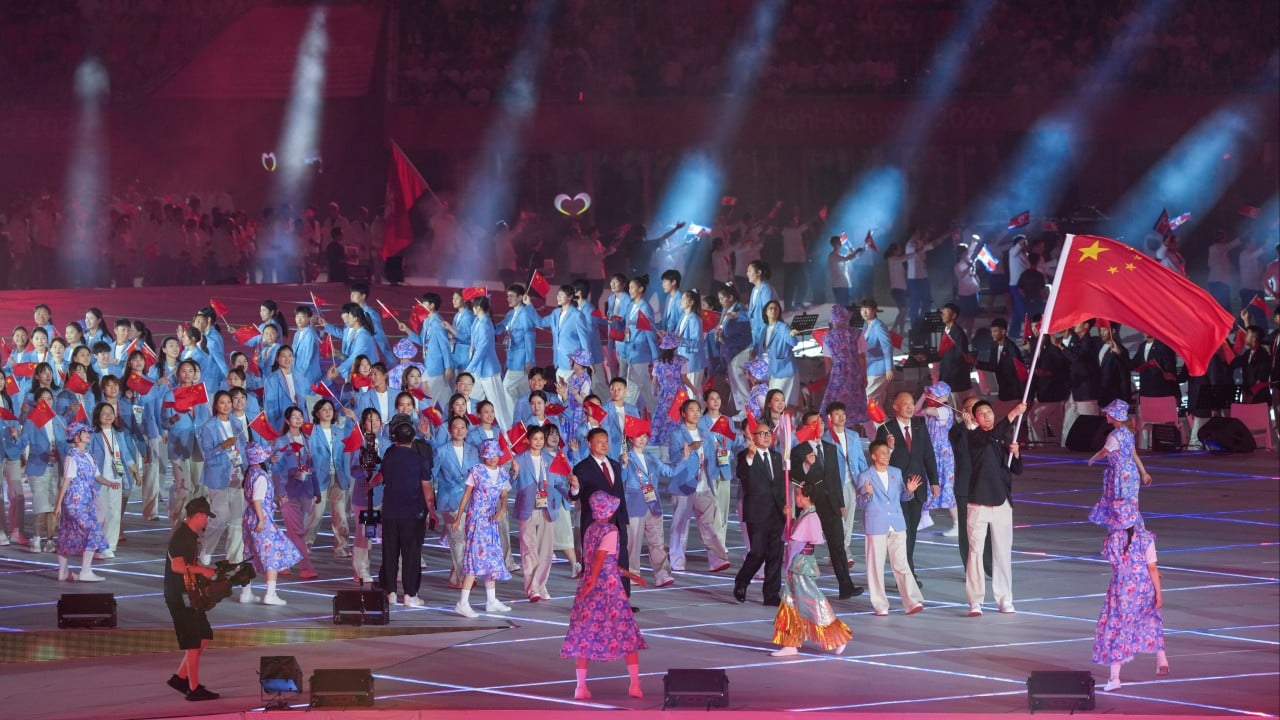
MANILA, Philippines — Team Philippines secured its most impressive overall medal tally in six decades at the 2026 Aichi-Nagoya Asian Games, finishing with 29 total medals consisting of four golds, nine silvers, and 16 bronzes. This stands as the nation’s highest overall medal haul since capturing 42 medals at the 1966 Bangkok Games. Historically, the Philippines achieved its all-time best performances during the 1954 Manila Games with a 14-14-17 medal spread and the 1958 Tokyo Games with eight golds, 19 silvers, and 20 bronzes. Fielding a 447-athlete delegation—the country's largest representation since sending 524 competitors to the 1994 Hiroshima Games—the Philippine Olympic Committee (POC) and Philippine Sports Commission (PSC) aimed to break through the four-gold threshold. The national team matched its four-gold performances from both the 2018 Jakarta and 2022 Hangzhou Games. Addressing public criticisms over the outcome, PSC Chairman Patrick Gregorio clarified that the target of eight golds was set as an inspiring challenge rather than a firm performance guarantee. He emphasized the value of the team's achievements, noting that silver finishes represent near-gold performances and urging observers to recognize the significant number of silver medals won. “That silver is also a gold; we were just unlucky. But the silver, if you compute it. And the thing that we’re talking about the eight golds. We should also count how many silvers we got,” Gregorio said. “Once a sportsman, always a sportsman. The bashing is part of the culture and social media; it does not only happen in the Philippines, but in the entire world,” he added. The 2026 campaign featured several notable milestones alongside narrow misses. The nine silver medals collected in Aichi-Nagoya equaled the nation's silver medal record previously set at the 1970 Bangkok Games. The delegation came closest to grabbing its fifth gold on the final day of competition on October 3, when Alexandria Luz Enriquez advanced to the finals of the women’s under-63 kilogram jiu-jitsu event, though she fell short against Thailand’s Orapa Senatham in a tightly contested bout. This achievement builds upon a long history of Asian Games participation. Following strong shows in the 1970s—including 22 medals in Bangkok 1970 and 14 apiece in Tehran 1974, Bangkok 1978, and Bangkok 1982—the Philippines recorded steady tallies across subsequent decades. The country gathered 18 medals at New Delhi 1982, 10 at Seoul 1986, 13 at Beijing 1990, 18 at Hiroshima 1994, and 26 at both Bangkok 1998 and Busan 2002. Leading into the current era, the nation captured 19 medals at Doha 2006, 16 at Guangzhou 2010, 15 at Incheon 2014, 21 at Jakarta 2018, and 18 at Hangzhou 2022 before reaching its 60-year high in 2026.